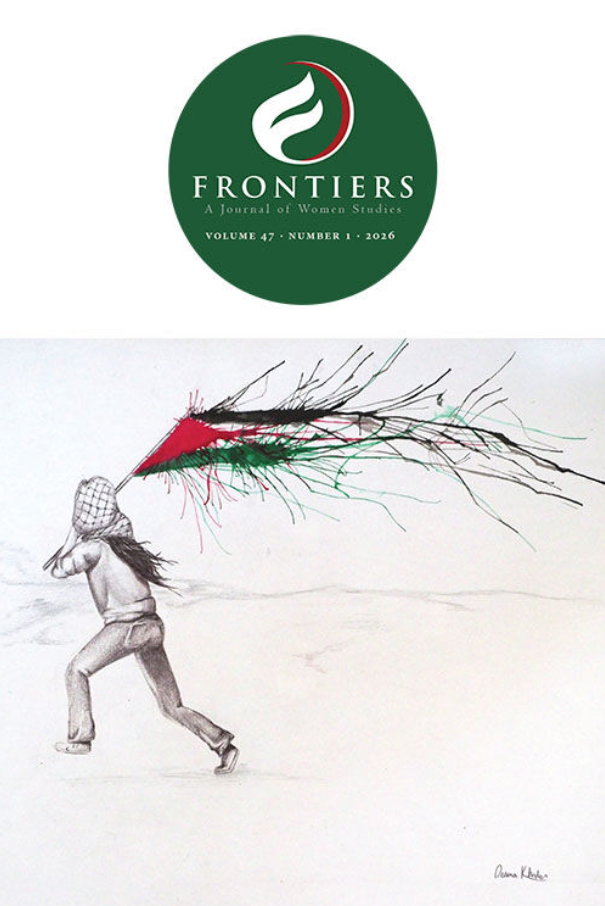
Critically Shaping Women, Gender, Feminist, & Sexuality Studies
For 50 years, Frontiers has been committed to embracing emerging visions of dynamic, undeterred, and unsettled “feminist frontiers.”
Frontiers encourages submissions in all areas of women’s studies that cross or reexamine boundaries and that explore the diversity of women’s lives as shaped by such factors as race, ethnicity, class, sexuality, religion, and place.
CURRENT ISSUE
Volume 46, Issue 3
This general issue features intersectional feminist literary and historical analyses, studies of activism and academic labor, and art. Amid precarity and bad news, including the addition of equity, inclusivity, intersectionality, and feminism to the growing list of words "banned" by the US federal government as a way to censor discourse and erase experiences, the contributions in this issue continue to grapple with feminist epistemology, stories, and histories of oppression as well as powerful resistance; erasure as well as persistence.
Explore this issue →
1 / 3
Book Reviews
Public Faces, Secret Lives: A Queer History of the Women’s Suffrage Movement
In her groundbreaking third monograph, Public Faces, Secret Lives: A Queer History of the Women’s Suffrage Movement, Wendy L. Rouse becomes the first historian to create a comprehensive history of the critical role LGBTQ+ activists played in securing women’s right to vote. The book highlights lesser-known queer suffragists from the late nineteenth century to the […]
Read This Post →
Book Reviews
Redefining the Political: Black Feminism and the Politics of Everyday Life
In Redefining the Political: Black Feminism and the Politics of Everyday Life, Alex J. Moffett-Bateau audaciously extends and re-imagines the theoretical and conceptual understandings of politics and the political. While traditional definitions of politics and the political are not inclusive of the unaccounted ways individuals interact with their communities, Moffett-Bateau’s reconceptualization offers new insights into […]
Read This Post →
Book Reviews
The Future That Was: A History of Third World Feminism Against Authoritarianism
The Future that Was offers a necessary historical account of Third World[1] women’s contributions to the field of Gender and Development and Transnational Feminisms. Durba Mitra intervenes by arguing that Third World women’s contributions to knowledge production through attending conferences, writing and research, publishing, and on the ground protests, between 1970 to late 1980s set the […]
Read This Post →
Active Calls
There are no active calls currently.